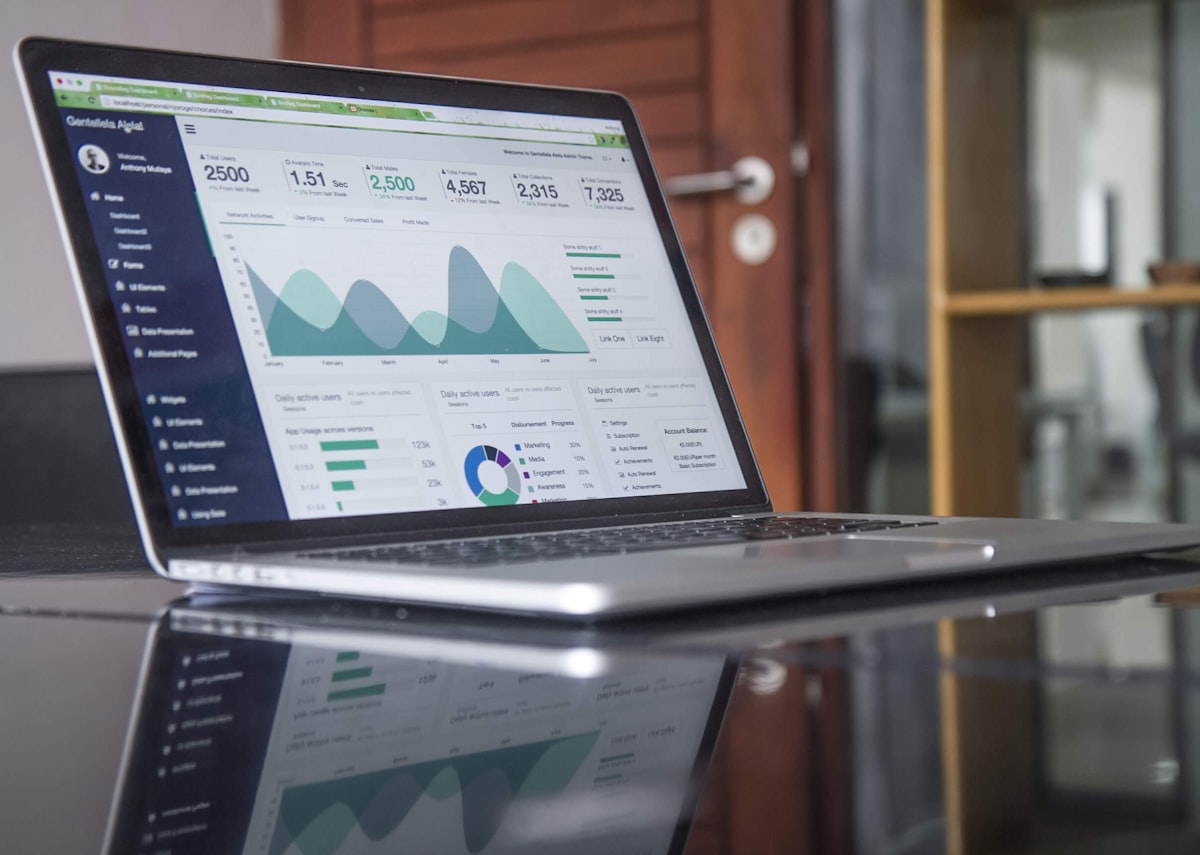
Every year someone declares that Google's algorithm has become "impossible to predict," and every year the businesses that actually rank keep doing the same handful of things well. In 2026, with AI Overviews sitting on top of the results page and Google's systems more capable than ever of judging real quality versus manufactured content, the gap between sites that rank and sites that don't has less to do with tricks and more to do with fundamentals executed properly. We work with clinics, manufacturers, retailers, and startups across Gorakhpur every week, and the pattern is consistent — the businesses that grow organic traffic are the ones that treat these factors as a system, not a checklist to tick once.
This guide breaks down the ranking factors that genuinely move the needle in 2026, in the order we'd prioritise them for a typical Indian small-business website, with concrete action items for each.
Content Quality and Search Intent Match
This remains the single biggest factor, and it has only gotten stricter. Google's systems no longer just check whether a keyword appears on the page — they evaluate whether the page's content actually satisfies what the searcher was trying to accomplish. A search for "best dentist in Gorakhpur near me" carries local, transactional intent; a page written as a 2,000-word history of dentistry will never rank for it, no matter how well-optimised the headings are, because it answers a different question entirely.
Therefore, before writing a single word, the real task is figuring out why someone is typing that query. Are they comparing options? Looking for a phone number? Trying to learn a concept before buying? Google infers this from the pages that already rank — if the top ten results are all comparison listicles, that query has commercial-investigation intent, and a plain product description won't compete.
Action Items
- Audit the current top 10 for your target keyword before writing anything — match the format (list, guide, product page, local listing) that's already winning.
- Answer the full query, not a fragment of it — cover pricing, process, and objections in the same page instead of forcing a second click.
- Update old content on a schedule rather than only publishing new pages; refreshed statistics and dates are a quiet but consistent ranking signal.
- Work with a content writing team that understands your industry rather than generic freelance copy that reads the same as every competitor's.
E-E-A-T: Experience, Expertise, Authoritativeness, and Trust
E-E-A-T isn't a single ranking signal Google plugs into a formula — it's a framework its quality raters and automated systems both use to judge whether a page deserves to be trusted, especially for "Your Money or Your Life" topics like health, finance, and legal advice. The first E — Experience — was added specifically to reward content written by someone who has actually done the thing, not just researched it. A hospital blog post about recovery timelines written by an actual doctor on staff will consistently outperform the same topic written by an anonymous freelancer, all else being equal.
In practice, this means visible author bios, verifiable credentials, real business addresses and phone numbers, and a genuine track record — reviews, case studies, years in business — all feed into how Google's systems (and the humans behind its rater guidelines) assess a site's trustworthiness. Consequently, an anonymous, thin "About Us" page is a real liability, not a cosmetic detail.
Action Items
- Add a real, named author byline with a short bio and credentials to every blog post and cornerstone page.
- Publish a genuine About page with your business's history, team, address, and registration details — not filler text.
- Actively collect and display real customer reviews rather than self-authored testimonials, and manage your reputation proactively through online reputation management.
- Get cited and linked from other credible sites in your niche — that's Google reading "authoritativeness" from the outside in, not just from your own claims.
Page Experience and Core Web Vitals
Core Web Vitals are one of the few ranking factors Google measures with hard numbers instead of judgment calls. Three metrics matter most: Largest Contentful Paint (LCP) — how fast the main content loads, ideally under 2.5 seconds; Interaction to Next Paint (INP) — how quickly the page responds to a tap or click, ideally under 200 milliseconds; and Cumulative Layout Shift (CLS) — how much the page jumps around as it loads, ideally under 0.1. INP replaced First Input Delay as an official Core Web Vital in 2024 and remains the metric most Gorakhpur business sites fail, usually because of heavy image sliders, auto-playing videos, or bloated page builders.
In fact, we routinely see local sites built on generic templates that load in 6-8 seconds on mobile data — a devastating number when a huge share of local searches in Purvanchal happen on mid-range phones over 4G, not fibre broadband on a laptop.
Action Items
- Run your key pages through Google's PageSpeed Insights and fix whichever of the three metrics scores worst first — don't chase a perfect 100.
- Compress and lazy-load images, and avoid render-blocking scripts and fonts above the fold.
- Reserve fixed space for images, ads, and embeds so content doesn't shift as the page loads.
- If your current site is fundamentally slow due to its build, it's often faster to rebuild than to patch — our website design and development team builds performance in from the start rather than bolting it on later.
Backlinks and Off-Page Authority
Backlinks remain one of Google's oldest and still most reliable ranking signals — a link from another site is, in effect, a vote of confidence that your page is worth sending someone to. What has changed is how strictly relevance and quality are weighed against sheer volume. Fifty low-quality directory links from unrelated countries do far less than three genuine links from local news sites, industry associations, or respected blogs in your actual niche.
Consequently, link-building in 2026 looks less like buying packages of "500 backlinks" and more like earning coverage: getting listed in local business directories that Google trusts, contributing genuinely useful guest content, getting mentioned by local journalists, and building relationships with complementary businesses who link back naturally. A well-executed link building strategy paired with consistent local SEO work is still one of the highest-leverage investments a Gorakhpur business can make, because most local competitors still haven't done it properly.
Action Items
- Prioritise a handful of genuinely relevant links over a large number of low-quality ones.
- Claim and complete listings on trusted directories and Google Business Profile before chasing anything exotic.
- Build real relationships — supplier pages, local associations, press mentions — rather than relying solely on cold outreach.
- Avoid paid link schemes and link farms entirely; Google's spam systems in 2026 are considerably better at detecting unnatural link patterns than they were even two years ago.
Mobile-First Indexing
Google has indexed and ranked the mobile version of nearly every website by default for several years now — the desktop version essentially doesn't exist to the crawler unless you have no mobile page at all. That means if your mobile site hides content behind extra taps, uses a stripped-down navigation, or serves smaller images than desktop, Google is judging your site by that weaker version, full stop.
We still see this mistake constantly on older Gorakhpur business sites — a full-featured desktop layout paired with a mobile version that was clearly an afterthought, missing half the service details or the contact form entirely. Given that the overwhelming majority of local searches in India now happen on a phone, this isn't a technical footnote — it is effectively the primary version of your website.
Action Items
- Check that your mobile site contains the exact same content, headings, images, and structured data as desktop — nothing hidden or removed.
- Test tap targets, forms, and click-to-call buttons on an actual mid-range phone, not just a resized browser window.
- Make sure your landing pages for paid campaigns are just as mobile-optimised as your organic pages — a slow mobile landing page wastes ad spend as fast as it wastes rankings.
The AI Overview and Structured Data Layer
The newest layer in 2026 is that ranking well in the traditional ten blue links no longer guarantees visibility — a growing share of queries now surface an AI Overview above everything else, synthesised from a handful of sources Google's systems judge most trustworthy and easiest to parse. Structured data (schema markup) is one of the clearest signals that helps here, because it hands Google unambiguous, machine-readable facts — your business hours, your ratings, your FAQ answers — instead of forcing its systems to infer them from prose.
We've written a full breakdown of exactly how to implement this in our guide to schema markup for SEO, and a deeper playbook on winning AI citations specifically in our Local SEO, AEO and GEO guide. The short version: clear headings, direct answers near the top of a section, and FAQPage or LocalBusiness schema all increase the odds an AI Overview cites your business by name rather than a competitor's.
Action Items
- Add LocalBusiness, Article, and FAQPage schema to your homepage, blog posts, and top service pages.
- Write direct, one- or two-sentence answers immediately under each heading before expanding into detail — this is exactly the format AI systems extract most easily.
- Keep your business's name, address, and phone number identical everywhere online — inconsistency is one of the fastest ways to get excluded from AI-generated local answers.
Putting It All Together
None of these six factors work in isolation, and that's really the point. A fast, mobile-friendly page with perfect Core Web Vitals still won't rank if the content doesn't match what the searcher wanted. A page written by a genuine expert with strong E-E-A-T signals still loses to a slower-loading competitor if load times frustrate visitors before they finish reading. Google's systems in 2026 are, in effect, checking whether your entire website behaves like a page a person would trust, recommend, and stay on — not whether you've optimised any single box.
If you'd like a clear-eyed audit of where your website currently stands against these factors — and a practical plan to close the gaps that matter most for your business — get in touch with our team. We work through exactly this framework with every SEO client we take on across Gorakhpur and Purvanchal.
Quick Answers
What is the single biggest Google ranking factor in 2026? Content quality and search intent match — whether the page actually satisfies what the searcher was trying to accomplish.
What is E-E-A-T and why does it matter for ranking? Experience, Expertise, Authoritativeness and Trust — the framework Google uses to judge whether a page deserves to be trusted, especially for health, finance and legal topics.
Which Core Web Vitals metrics matter most for ranking? LCP under 2.5 seconds, INP under 200 milliseconds, and CLS under 0.1 — INP is the metric most Gorakhpur business sites fail.
How does structured data help a website get cited in AI Overviews? It hands Google unambiguous, machine-readable facts instead of prose, increasing the odds an AI Overview cites the business by name.
What Our Clients Say
Real feedback from businesses RS Web Solutions has worked with in Gorakhpur.
"RS Web Solutions ne hamari website ka complete SEO kar ke Google first page pe laya. Gorakhpur mein inka koi mukabla nahi. Highly recommended!"
"Best digital marketing company in Gorakhpur. They designed our e-commerce website and handled our social media. Sales increased by 40% in just 3 months. Excellent team!"
"Professional team, timely delivery, and excellent support. RS Web Solutions is the go-to digital marketing agency in Gorakhpur for any business wanting to grow online."